Community benefit that stays on.
We design, run, and report the community programs behind AI infrastructure, so the towns that host it get a durable share, and the companies funding it can show exactly what it did.
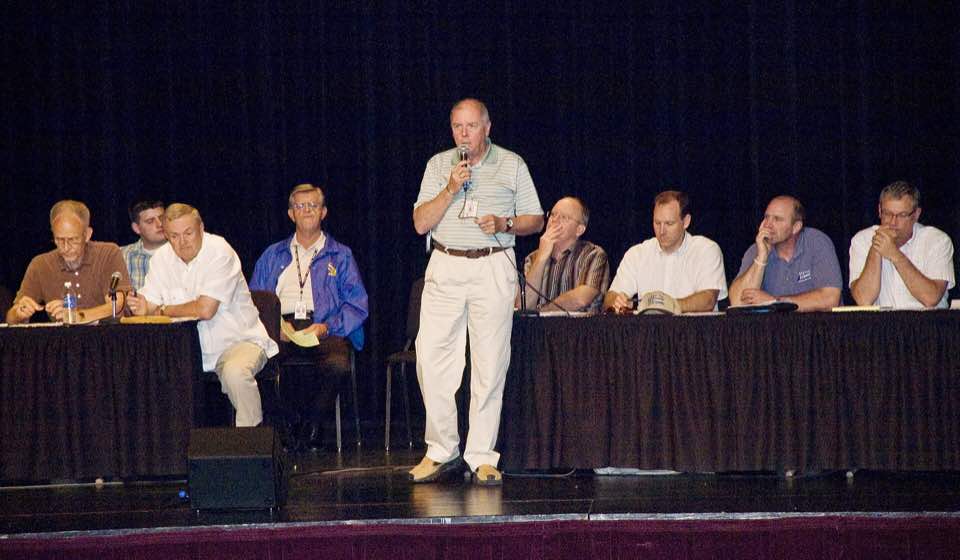
A public hearing is where a community program is tested. Ours are built to pass it.
The situation
The money is there. The mechanism is not.
committed by a single hyperscaler to data center communities this year
Meta, August 2026
of Americans oppose a data center being built in their area
Gallup, March 2026
organized opposition groups across 49 states
Data Center Watch, March 2026
Most of that money will be spent as one-time philanthropy, decided at headquarters, announced in a press release, and forgotten by the next public hearing. That is not what changes a town's mind, and it is not what a company can defend in front of a skeptical board or a hostile county commission.
A community benefit program that works has four parts: residents who set the priorities, a fund held locally, money that arrives on a schedule, and reporting that anyone can check. That is what we build.
The fights are local and they are specific. Of 326 data center proposals tracked across 24 states, roughly one in six has been rejected, withdrawn, or delayed. Pennsylvania alone has 86 of them, and its GRID standards now make a community benefit plan a condition of state support. Data Center Proposal Tracker, September 2026
The difference
A grant program is not a community program.
Most corporate community money reaches a town as a grant program: headquarters names the focus areas, local nonprofits apply, and the grantee writes the impact report. Frederick County's $110 million agreement announced this month lists seven line items and says nothing about who holds the money, who decides, or how anyone checks. That is where most agreements stop, and where our work starts.
| A corporate grant program | A Baseload program | |
|---|---|---|
| Who sets the priorities | Headquarters, in the program's focus areas | Residents, through a needs assessment and a council they hold the majority of |
| Where the money sits | With the company, released grant by grant | In a restricted fund at a community foundation in the region, under published rules |
| When it arrives | Annual cycle, at the company's discretion | On a schedule written into the program and tied to the facility |
| Who does the reporting | Each grantee, to the company | We do, quarterly, in public, with the foundation's fund statement attached |
| Who can check | The company | Anyone. The report is the same document for the board, the county, and the neighbors. |
Who we work with
Three clients, one program.
Data center operators
You are building or operating a facility and you need a community program that survives the public hearing, satisfies a state requirement, and can be independently audited. We design it and stand it up.
Corporate community funds
You have committed money to host communities and you need a way to direct it that is locally led, measurable, and defensible. We design the local process, structure the fund, and report on every dollar.
Enterprises buying compute
Your AI workloads run somewhere. We show you where, what it cost the region, and what it funded, in a format your sustainability team can use.
The program is for the town, not the press release.
What we do
Design it. Run it. Prove it.
Program design
A participatory needs assessment done with residents, a resident-majority advisory council, and a fund structure held at a community foundation in the host region. Delivered in six to twelve months, built to be audited.
Fund structuring and administration support
We do not hold money. We set up the fund agreement with a local community foundation, define the distribution rules, and support the advisory council's process. The money stays in the region, in an institution the region already trusts.
Impact reporting
Quarterly public reports showing what came in, what went out, and what it built. Written for residents first, in plain language, with the numbers auditors need.
Enterprise compute reporting
A reporting layer that documents where your compute ran, the facility's public scorecard if it has one, and the community contribution your spend generated. Built to drop into a sustainability report.
Certified compute access Coming
As certified facilities come online, brokered access to capacity that meets a public standard.
What we do not do
- We are not a public relations firm and we do not lobby. If you want a message, hire one. If you want a program a county board can believe, that is us.
- We take no fee tied to the outcome of a vote, a permit, or an approval. Our fee is fixed and known before the hearing.
- We never hold, disburse, or administer community money. The fund sits at a community foundation in the region.
- We work one side of a project. We do not advise a developer and the township that is deciding on it.
How a program works
Six steps, in the open.
- 01
Listen
A needs assessment run with residents, local officials, and the water and power authorities. Not a survey; a process.
- 02
Convene
A standing advisory council with a resident majority and an independent facilitator.
- 03
Structure
A restricted fund at a community foundation in the region, with published rules.
- 04
Fund
Contributions arrive on a schedule tied to the facility's activity, not to a press cycle.
- 05
Decide locally
The council sets priorities: water infrastructure, broadband, workforce training, schools, whatever the town names.
- 06
Report
Quarterly, publicly, in plain language, with every dollar accounted for.
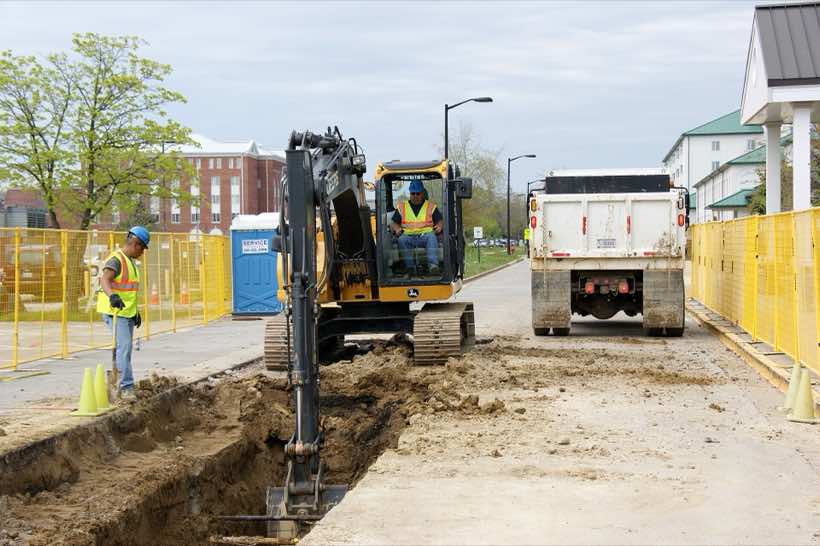
Step five in practice.
A water main the county had on its capital plan for years, paid for by the fund and chosen by the council.
For residents and county officials
If a developer has hired us, here is what you can expect.
You did not hire us, and we know it. The developer pays our fee. These are the things you can hold us to anyway, and the questions we answer in public before anyone has to ask them.
What you can hold us to
- Residents hold the majority of seats on the advisory council, with an independent facilitator we do not employ.
- The fund is held by a community foundation you already know, never by us or the developer.
- Every grant is named. Every quarterly report is published within thirty days of quarter end, with the foundation's statement attached.
- We are paid a fixed fee by the developer. Nothing we earn depends on how the vote goes.
- We do not advise the developer and your township on the same project.
The questions we answer first
- How much power and water the facility will draw at full build-out, not just in phase one.
- Who pays for the substation, the water main, and the road, and what happens to your rates.
- How many permanent jobs, with what titles and wage ranges, and how many go to local hires.
- What the contribution schedule is, in dollars and dates, and what happens if the facility is sold.
- Who is responsible in year twenty, when the people at the hearing have moved on.
If you are a county official who wants advice on the public side of a negotiation, we do that too, for the county, and never on a project where we work for the developer. Talk to us.
Why "Baseload"
The part that is always on.
Baseload is the floor of power demand, the part of the grid that never switches off. Community benefit around AI infrastructure has mostly been the opposite: a peak at the announcement, then nothing. We think the benefit should behave like baseload. Steady, scheduled, and there when nobody is looking.
Our relationship with the Compute Stewardship Council
Disclosure.
Baseload Commons was founded by the same person who founded the Compute Stewardship Council, an independent nonprofit that publishes a standard for AI data centers and certifies facilities against it. The two organizations are separate. The Council's independent board and Certification Committee make certification decisions, and our founder takes no part in any decision involving a facility we worked on. The Council lists us as one of its recognized program designers, on the same terms as any other firm, and every Council scorecard names the program designer a facility used.
We design programs. We do not certify them. If you want a program that will be audited by the Council, you should know that we will have no contact with the assessors who audit it.
Work with us
Start with a conversation.
Tell us where you are. A facility in permitting, a fund you have already announced, or a compute footprint you need to account for. We will tell you honestly whether we are the right firm for it.